The board of HDFC Bank has approved the appointment of Keki Mistry and Renu Karnad as the additional non-executive directors of the bank, and V Srinivasa Ranjan as its executive director. Mistry was the chief executive officer and vice chairman of HDFC, which merged with the bank today (1 July 2023). Karnad has been the managing director of HDFC since 2010. Ranjan was the executive director and chief financial officer of HDFC.
Analysts have largely maintained their positive outlook on HDFC Bank, as the private lender reported in-line results for the October-December quarter (Q3) of the current financial year (2024-25/FY25). They believe the results were 'strong' given the tough macro environment, and relative to peers.

The controversy involves mis-selling Credit Suisse AT-I bonds to NRIs as fixed-maturity instruments, later written off after collapse.

Indian stock markets, including the Sensex and Nifty, experienced their third consecutive day of declines, driven by a global selloff, escalating tensions in West Asia, and a subsequent rise in crude oil prices.
Indian benchmark indices Sensex and Nifty extended their losses for a third consecutive day, driven by firm crude oil prices, elevated global bond yields, and significant foreign fund outflows, making investors cautious.
The Reserve Bank of India (RBI) has introduced a new framework allowing banks to offer differential interest rates on bulk deposits based on their liquidity characteristics under the Liquidity Coverage Ratio (LCR) framework, while maintaining the principle of uniform pricing across similar deposits.
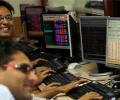
The benchmark BSE Sensex rebounded by 362 points, ending a four-day losing streak, driven by strong buying in metal, private banking, and oil and gas shares, while the broader NSE Nifty saw modest gains despite paring some advances in the closing session.

The Reserve Bank of India (RBI) has given HDFC Bank six months to migrate HDFC's home loan customers to external benchmark linked lending rate (EBLR), top sources in the bank told Business Standard. Almost half of HDFC's 5.4 million customers are home loan customers. It is mandatory for banks to link retail loans and loans to micro, medium and small enterprises to an external benchmark. Non-banking financial companies do not have such a mandate.

From the Sensex pack, Bajaj Finserv, Larsen & Toubro, Bajaj Finance, HDFC Bank, Bharat Electronics and Kotak Mahindra Bank were among the major laggards. However, Tata Steel, Asian Paints, UltraTech Cement, and Trent were the biggest gainers.

Indian benchmark indices Sensex and Nifty recorded sharp gains, rising over 1 per cent, driven by strong performances in IT stocks, HDFC Bank, and renewed foreign fund inflows, despite mixed global cues and elevated crude oil prices.
As many as 140 million customers of HDFC Bank and Axis Bank are expected to face interruption in banking services in the weekend due to the former's system upgrade and the transition of Citi India business to the latter. Both the banks have notified their customers about the interruption in services. HDFC Bank - the country's largest private sector lender with 93.2 million customers - had announced that it will undertake a system upgrade on July 13, wherein it will migrate its core banking system (CBS) to a new engineered platform to enhance customer experience.

From the Sensex basket, Power Grid, IndusInd Bank, Tata Motors, JSW Steel, NTPC, HCL Technologies, Tata Steel, ICICI Bank, Mahindra & Mahindra, Axis Bank, HDFC Bank and Reliance Industries were among the major laggards. Among the gainers, Hindustan Unilever climbed over 5 per cent. Tech Mahindra, Nestle, ITC, Wipro, Tata Consultancy Services and Kotak Mahindra Bank were the other major gainers.
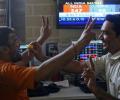
Indian benchmark indices Sensex and Nifty extended their winning streak to a fourth consecutive day, driven by strong buying in blue-chip bank stocks and a decline in global crude oil prices. Fresh foreign fund inflows also contributed to the optimistic sentiment in the domestic equity market.
HDFC Bank expects to amalgamate its home loan major parent HDFC into itself by September next year, a top official said on Friday. Both HDFC and HDFC Bank held general meetings on Friday to seek shareholder approvals for what is billed as the largest merger in Indian corporate history at over $40 billion. At the time of announcing the merger on April 4 this year, the entities had said the merger will take 12-18 months.

HDFC Bank has been conscious in not accepting high-cost deposits, which have resulted in slower growth in October-December, said Sashidhar Jagdishan, managing director and chief executive officer, during an interaction with Goldman Sachs recently. He said during times of tight liquidity, short terms hardened, as was the case in October-December. "Not only did we participate, but we also gave up which came up for maturity," he said.
The Securities Appellate Tribunal (SAT) has quashed a Sebi order against HDFC Bank, whereby the regulator had imposed a penalty of Rs 1 crore on the lender in a case pertaining to invoking securities pledged by stockbroker BRH Wealth Kreators. In addition, the regulator had directed to transfer Rs 158.68 crore along with seven per cent interest per annum into an escrow account till the issue of settlement of clients' securities is reconciled. These directions were issued by Sebi in January 2021 as HDFC Bank invoked securities pledged by BRH Wealth Kreators in violation of the regulator's interim order passed in October 2019.

HDFC Bank's customers will now be able to enjoy a complete suite of banking and commerce services over their mobile phones with the bank partnering with ngpay, a mobile solution brand from JiGrahak Mobility Solution.
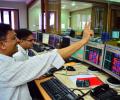
Maruti, Bajaj Finance, Titan, Kotak Mahindra Bank, HDFC Bank, IndusInd Bank, Mahindra & Mahindra and Larsen & Toubro were among the major gainers. Wipro, HCL Technologies, Nestle, Tata Consultancy Services and Tata Motors were among the laggards.
Foreign portfolio investors (FPIs) continue to cut their shareholding in both Housing Development Finance Corp (HDFC) and HDFC Bank. As per latest data, during the June 2022-23 quarter (Q1FY23), FPIs held 68.1 per cent and 65.96 per cent, respectively, in HDFC and HDFC Bank. Overseas shareholding is down 111/406 basis points (bps) and 260/412 bps on the quarter-on-quarter (QoQ)/year-to-date (YTD) basis in HDFC and HDFC Bank, respectively.
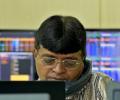
Indian benchmark equity indices, Sensex and Nifty, experienced declines in early trade due to renewed tensions in West Asia, which led to a rebound in crude oil prices, coupled with weak global market trends and foreign fund outflows.

The RBI on Monday said state-owned SBI, along with private sector lenders ICICI Bank and HDFC Bank continue to be Domestic Systemically Important Banks (D-SIBs) or institutions which are 'too big to fail'. SIBs are perceived as banks that are 'too big to fail (TBTF)'. This perception of TBTF creates an expectation of government support for these lenders in times of distress.

Indian benchmark indices, Sensex and Nifty, recorded their fourth consecutive day of losses, driven by relentless foreign institutional investor (FII) outflows, rising bond yields, and a significant surge in crude oil prices, impacting overall investor sentiment.

Benchmark indices Sensex and Nifty fell for the third day running on Thursday, dragged by continuous selling in HDFC Bank and profit-taking in consumer durables and utility shares. The 30-share BSE Sensex fell by 313.90 points or 0.44 per cent to settle at 71,186.86. During the day, it tanked 835.26 points or 1.16 per cent to 70,665.50.

Indian benchmark indices, Sensex and Nifty, experienced a significant drop in early trade, with the Sensex falling over 600 points, primarily due to crude oil prices surging past the USD 100 per barrel mark and weak global market trends. Track Sensex, Nifty on September 24.
State Bank of India (SBI) anticipates that the newly introduced Merchant Discount Rate (MDR) on person-to-merchant (P2M) UPI transactions above 2,000, effective October 15, will enable it to recover the costs incurred in processing and facilitating these transactions, potentially even generating a small surplus.
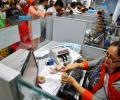
Major Indian banks, including Axis Bank, HDFC Bank, and RBL Bank, have reported a decline in employee headcount in FY26, attributing the reductions to significant investments in technology and automation yielding productivity gains across operations.

'Value is not where you make money in India. It never has been.' 'You have to buy momentum.' 'Momentum is in technology, and I don't see that slowing down because I believe the AI infrastructure boom is going to last for a while.'
The benchmark Sensex plummeted 813 points to a three-month low, with the Nifty settling below 23,450, as escalating tensions in West Asia drove crude oil prices above USD 100 per barrel, leading to widespread selling in IT, FMCG, financial services, and oil & gas shares.
HDFC and HDFC Bank's merger - touted as India's biggest-ever corporate merger - pumped up shares of the two entities on the bourses. Shares of Housing Finance Development Corporation (HDFC) skyrocketed 9 per cent while those of HDFC Bank zoomed 10 per cent. In comparison, the benchmark S&P BSESensex and the Nifty50 indices settled 2.2 per cent higher on Monday.

Indian stock markets this week will be primarily influenced by a series of corporate Q1 earnings, the evolving geopolitical situation in West Asia, and fluctuations in crude oil prices, according to market analysts.
Fair trade regulator CCI on Monday approved HDFC Bank's acquisition of 4.99 per cent shareholding in HDFC ERGO General Insurance Company. In June, HDFC Bank had said its board has given approval to buy more than 3.55 crore shares in group firm HDFC ERGO General Insurance Company for over Rs 1,906 crore from the parent company Housing Development Finance Corporation (HDFC).
The RBI on Tuesday said state-owned SBI, along with private sector lenders ICICI Bank and HDFC Bank continue to be Domestic Systemically Important Banks (D-SIBs) or institutions which are 'too big to fail'. SIBs are perceived as banks that are 'too big to fail (TBTF)'. This perception of TBTF creates an expectation of government support for these banks in times of distress. Due to this perception, these lenders enjoy certain advantages in the funding markets.
We have not been able to communicate in a very articulate manner and clear manner on the merger as earnings were due, says HDFC CEO.

Sources clarify that the NCLT's approval of a repayment plan for Essel Group founder Subhash Chandra does not signify a 99.97 per cent write-off of Rs 22,000 crore in bank loans, as the figure represents claims against him as a personal guarantor, not debt personally borrowed.
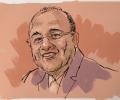
Having successfully executed the merger with parent HDFC, HDFC Bank's managing director and chief executive Sashidhar Jagdishan on Saturday said the country's largest lender aims to double every four years. In a letter to the over 4,000 employees from HDFC who joined the bank's rolls on Saturday, Jagdishan said the future is bright, and the work on realising the potential of the merger starts now. "The runway for financial services and mortgage, which are so underserved and under penetrated, is going to be very large. HDFC Bank - the combined entity - with a large and growing distribution and customer franchise, more than adequate capital, healthy asset quality and profitability, will be best positioned to capture growth.

Indian benchmark indices, Sensex and Nifty, closed nearly flat on Thursday, influenced by the US Federal Reserve's interest rate hike and indications of further monetary tightening. Despite some intraday gains, caution prevailed, with foreign institutional investors continuing to offload equities. Meanwhile, the National Stock Exchange of India's (NSE) mega initial public offering opened for subscription, garnering 39 per cent subscription on its first day.
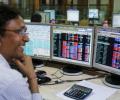
Among the Sensex components, Mahindra & Mahindra, Bharti Airtel, Tech Mahindra, Titan, Infosys, JSW Steel, Bajaj Finserv, HDFC Bank, Larsen & Toubro and Kotak Mahindra Bank were the major gainers. Maruti, State Bank of India, Power Grid, Tata Motors and IndusInd Bank were the laggards.

Indian benchmark indices, Sensex and Nifty, closed almost unchanged due to profit-taking in blue-chip stocks, geopolitical uncertainties, fluctuating oil prices, and weak Asian market trends, despite cooling US inflation offering some support.

Indian benchmark equity indices, Sensex and Nifty, rebounded nearly 1 per cent, with the Sensex jumping 790.54 points to 76,991.22, driven by softening crude oil prices and strong buying in banking, financial, and IT shares.
Indian benchmark indices Sensex and Nifty saw a rebound in early trade, driven by a moderation in crude oil prices, despite persistent selling by Foreign Institutional Investors (FIIs) and mixed global market cues.
